
Utica Warrant Checks
Utica runs no warrant portal of its own. That pushes a warrant search onto the official fallback chain, and Indiana MyCase is the first stop. It finds public cases by cause, citation, cross-reference, party, or attorney data. Treat it as a case search, not proof that an active warrant exists or not.
- Read the document for the issuing court and cause or citation number.
- Search MyCase with that exact number and review later docket events.
- Call the issuing Clark Circuit Court through the current clerk directory.
- Use the Utica marshal clue for local routing and the sheriff for sheriff-held records.
- Ask the court or an Indiana attorney about appearance, bond, recall, or other action.
A Utica name search can mislead through similar names, restricted records, or system lag. Only the issuing court supplies current judicial status.
No Utica Warrant Portal Located
Utica publishes no court portal, police portal, public warrant list, most-wanted page, roundup, or amnesty notice. That silence is about posting, not about warrants. It does not mean no Utica warrants exist.
Use the fallback: search the public case docket, contact the issuing court, then seek a sheriff or marshal record only when that agency owns the needed material.
Commercial name-search pages cannot fill the official gap in Utica. Their results may be stale, incomplete, or belong to a different person, and a missing result can simply reflect confidentiality. Ask the court.
Policing and Courts in Utica
The official Utica contact page lists the town contact location at 107 North 4th Street, Jeffersonville, Indiana 47130. It publishes no separate town court, police department, or warrant-search service. General town contact is a starting point for municipal routing, not judicial confirmation, and the page shows the scope of that municipal contact.
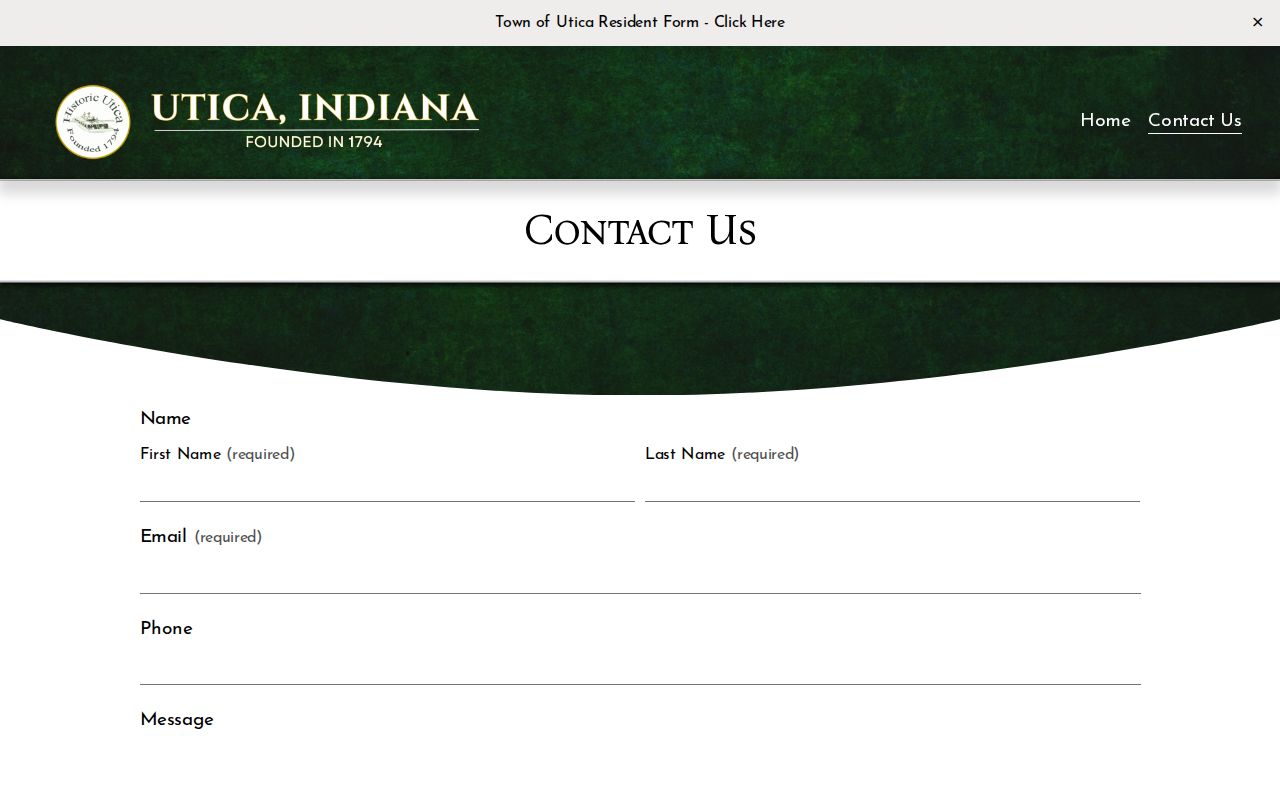
That town route explains why the issuing court and county clerk stay central to any Utica warrant question.
Utica Town Contact
General municipal routing
107 North 4th Street
Utica Marshal
Local law-enforcement routing clue
812-288-4357
Clark County Clerk
Current trial-court records
501 East Court Avenue
Utica Marshal Is a Routing Clue
The Clark County phone directory lists “Utica Marshall” at 812-288-4357, a useful local contact when a service question touches Utica enforcement. The spelling quirk should not suggest the marshal keeps a public online warrant list, because no such list exists. A marshal can route an agency question but cannot clear a court warrant on his own. A judge or authorized issuing authority controls recall, quash, withdrawal, or satisfaction. For sheriff-held service records, turn to the Clark County Sheriff records page or call 812-283-4471. Local service and current court status are related but separate records.
Warrants in Utica: Main Types
A Utica address alone tells you nothing about the type of process or the issuing court. The document title and cause number govern routing.
| Type | Meaning | First route |
|---|---|---|
| Arrest warrant | Judicial arrest command following charging and probable-cause steps | Issuing court |
| Bench warrant | Process often tied to failure to appear or follow an order | Issuing court clerk |
| Search warrant | Authority for an investigation-related search | Access may be restricted |
| Body attachment | Appearance process in some civil or contempt matters | Issuing court |
| Tax warrant | Revenue collection lien, not arrest process | DOR or sheriff tax route |
A citation or summons is not automatically a warrant in Utica. If a date is missed, the court decides the result and any later process.
Utica Jurisdiction Starts With Paper
A small town like Utica tempts people to call the town hall first, yet the paper in hand often gives the better route. A citation number may lead to a traffic or infraction docket. A cause number identifies the court and case type. A sheriff return points to a service record, while a police or marshal report belongs to the agency that wrote it.
| Clue | What it identifies | Next step |
|---|---|---|
| Cause number | Court and case | Search MyCase, call clerk |
| Citation number | Traffic or infraction file | Check official court record |
| Agency report number | Law-enforcement record | Contact owning agency |
| Tax warrant number | Revenue lien matter | Use DOR and sheriff tax route |
Copy the identifier exactly. Avoid sending sensitive data to an unofficial service.
Utica Warrant Records: What They Show
A public record can still reveal court process through docket events even when the warrant paper itself is restricted. Read the newest event and verify it with the court handling the Utica case.
| Cause number | A court key such as 10C04-YY-XXXX-000000; this is only a format example. |
|---|---|
| Issuing court | The current court controlling process. |
| Process type | Arrest warrant, bench warrant, attachment, or another term. |
| Issue date | The entry date, not proof of present activity. |
| Charge or case class | A public allegation or category, not guilt. |
| Bond | An amount or condition if set and public. |
| Status event | Served, returned, recalled, quashed, reissued, or disposed. |
Sealed, juvenile, personal, and investigation-related material may be absent or redacted in any Utica record. A blank public result is not a status certificate.
Utica Warrant Terms in Context
Utica docket entries carry their own language. “Issued” marks the court's entry of process, “recalled” records withdrawal, and “quashed” means a court set process aside. “Returned” needs court context, and “reissued” may mean newer process replaced an old document.
- Active
- Shown by the issuer as in force; confirm directly.
- Failure to appear
- A missed required court event whose consequence the court decides.
- Recall
- Withdrawal by the issuing authority.
- Quash
- A court order setting process aside.
- Return
- A report about service or attempted service.
A closed case label does not explain each old Utica entry. Ask the clerk for the current public status.
Utica Warrants and Clark County
Utica's marshal may assist with local service or routing, but Clark Circuit Courts and the Clark County Clerk hold current county trial-court records, and the sheriff serves process and maintains sheriff records. IDACS/NCIC stays restricted to authorized agencies. The Clark County warrant records overview supplies the full county framework.
Warrant flow: Utica marshal / issuing court › Clark County Sheriff › authorized IDACS/NCIC system
Start with the record owner. Utica Town Hall cannot change a court order, and the court cannot release restricted agency data merely because a case exists.
Utica MyCase Search Strategy
For a Utica case, the official MyCase tips describe searches by case, citation, cross-reference, party, and attorney data. Filters cover court, open or closed status, and filing dates. Wildcards and sounds-like tools have limits, and results beyond one thousand are not displayed.
- Use a cause or citation number first.
- Narrow by court and date if a party search is required.
- Read entries after the first warrant reference.
- Call the issuing court with the exact result.
- Keep any order, receipt, or stamped confirmation.
Date of birth may narrow a party search but is never displayed. A same-name result is not proof of identity, so confirm through the Utica case itself.
Safe Utica Warrant Response
Only the issuing court or an authorized agency can clear, recall, quash, withdraw, or satisfy a warrant. A town call, a chat with the Utica marshal, a records request, or a payment does not automatically change every warrant, so ask whether counsel, an appearance, filing, bond, payment, or identification is required. Clark County publishes no standard warrant-recall fee or public recall form in its schedules. Do not assume an amount, and do not treat a general pro se form as clearance. Clerk staff can explain procedure but cannot give legal advice. After any court action, seek written proof, keep receipts, and note the next hearing date. Call 911 for emergencies. Never confront another person or attempt private service in Utica.
Accessing Utica Warrant Records
Utica warrant records sit with the offices that created them. The Indiana Access to Public Records Act covers marshal and sheriff agency material, with some exceptions, while court records follow the Indiana Rules on Access to Court Records. Ask for public, non-confidential documents and name the agency, the record type, the date range, and the cause number.
Key rules:
Indiana Access to Public Records Act provides agency-record access with lawful exceptions.
Indiana Access Rule 4 gives the general court-record access framework.
Indiana Access Rule 5 protects sealed, juvenile, sensitive, and some arrest or search warrant records.
If a Utica office denies access, ask which statute, rule, or order supports that. Accept lawful redaction, and confirm warrant status with the issuing court itself.
Preparing an Utica Warrant Inquiry
Start with what the town is. The Census incorporated-place table puts Utica's 2020 population at 860, which explains its place among the five profiles here. That number says nothing about warrant volume or access. It does not prove process is rare. It does not tell you a town court exists, or that the marshal holds every local record. The document and the issuing court remain the best routing clues. Prepare before you call. Gather the cause or citation number, the issuing court, the document date, and every later notice. Ask one clear status question, then request the official next step. In Utica, the town contact, the marshal, the sheriff, and the clerk each hold different roles. Exact identifiers keep a service question from being mistaken for a request to change court process. Confirm hours before you travel, and log each official contact by date and name. When a court acts, ask when the public docket will reflect the change and what written proof exists. A receipt shows payment. An order or updated docket is stronger proof of a recall, quash, or disposition. Counsel can advise when custody or appearance is possible. Keep the roles straight. The marshal number routes local agency questions; it is not a warrant-search product. A sheriff records request seeks sheriff-held public material and does not clear judicial process. Separating these lets a Utica resident ask the issuing court about an outstanding warrant while requesting service or agency documents only from the office that owns them. That discipline makes every follow-up easier.